
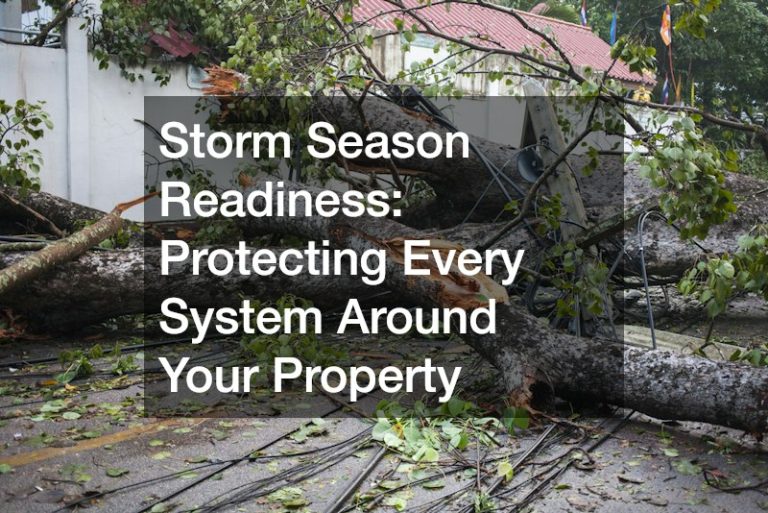
When storm season approaches, most homeowners think about boarding up windows and stocking batteries, but the systems that keep a property running safely often get overlooked until it’s too late. Roofs, foundations, electrical panels, and outdoor structures all take a beating during high winds and heavy rain, and a weak link in any one of them can lead to expensive damage. The good news is that a methodical, system-by-system approach can catch small vulnerabilities before a storm turns them into major repairs.
This guide walks through the key areas of your property worth inspecting and reinforcing well before the forecast turns ominous.
Evaluate Your Roof Structure and Drainage
Your roof is your property’s first line of defense, and even minor issues like lifted shingles or cracked flashing can let water in once wind-driven rain starts testing every seam. Before storm season peaks, it’s worth scheduling a thorough inspection to catch wear that isn’t visible from the ground. Many homeowners wait until a leak appears, but by then the damage has often spread into the attic insulation or ceiling drywall.
Reaching out to established roofing companies for a pre-season checkup is one of the most cost-effective moves you can make. A trained eye can spot soft spots, deteriorating underlayment, and clogged gutters that might otherwise go unnoticed until a downpour reveals the problem the hard way.
- Check for missing, curled, or cracked shingles after the last major windstorm
- Clear gutters and downspouts so water has somewhere to go during heavy rain
- Inspect flashing around chimneys, skylights, and vents for gaps
- Look for granule buildup in gutters, a sign of shingle wear
- Confirm attic ventilation is clear to prevent moisture buildup
Confirm Your Electrical Panel and Backup Power Are Storm Ready
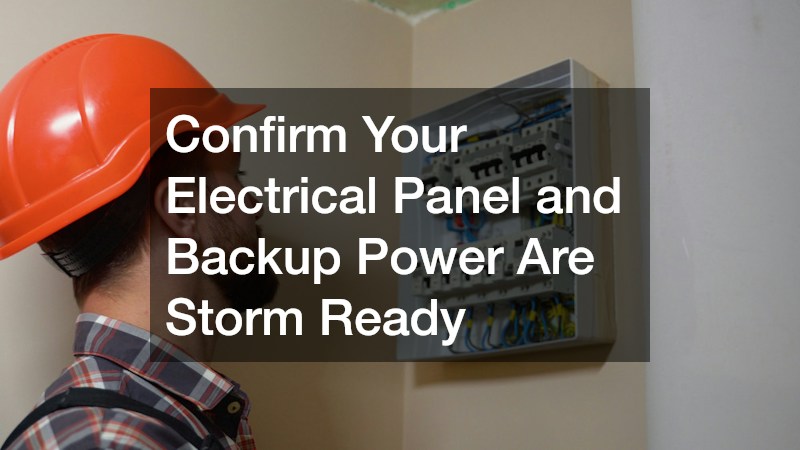
Power interruptions are one of the most common storm-season headaches, and an aging or overloaded electrical panel only makes things worse when the grid is already under stress. Flickering lights, warm outlets, or a panel that trips frequently are all signs it’s time for a professional evaluation rather than a quick fix. Surge protection at the panel level can also save appliances and electronics from damage caused by lightning strikes or power restoration spikes.
If you rely on a generator or battery backup system, test it before storm season rather than during an actual outage. Running it under load for a short period reveals fuel or charging issues while you still have time to address them calmly.
- Label circuits clearly so you can shut off power quickly if flooding occurs
- Install whole-home surge protection if you haven’t already
- Keep generators outdoors and away from windows to avoid carbon monoxide risk
- Test transfer switches to confirm they engage properly
- Store extra fuel safely and rotate it periodically
Service Your Heating and Cooling Equipment Before Peak Storms
Extreme weather often brings extreme temperatures along with it, and a cooling system that fails right after a storm leaves your home uncomfortable and your family stressed. Scheduling a seasonal tune-up with reliable AC companies ahead of time ensures refrigerant levels, electrical connections, and condensate drains are all functioning properly before demand spikes. A unit that’s already struggling will have a much harder time recovering after a power surge or flooding event.
Outdoor condenser units are particularly vulnerable to debris and flying branches during high winds, so securing or covering them temporarily can prevent costly damage. It’s also worth confirming that the unit sits on a stable pad that won’t shift if the ground becomes saturated.
- Trim trees and shrubs away from outdoor units
- Clear debris from around the condenser before a storm hits
- Confirm the unit is elevated above typical flood lines in your area
- Replace air filters so airflow isn’t restricted during high-use periods
- Check thermostat batteries so you’re not caught without climate control
Reinforce Garage Doors Against Wind Pressure
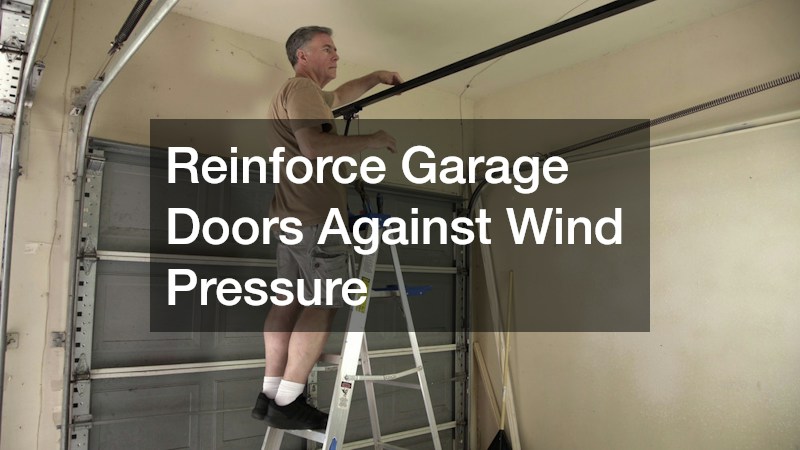
Garage doors are one of the largest openings in any home, and if one fails during a storm, the sudden pressure change can damage the roof structure and interior walls. Standard doors are often not rated for high wind zones, which is why many homeowners in storm-prone regions invest in custom garage door installation designed to withstand specific pressure ratings. A properly rated door includes reinforced panels, heavier tracks, and bracing that keeps it anchored even as wind gusts intensify.
Beyond the door itself, the surrounding frame and opener mechanism matter just as much. A door that’s structurally sound but poorly installed can still fail at the weakest connection point, so professional installation and periodic hardware checks are worth the investment.
- Look for wind-load ratings appropriate to your region
- Inspect tracks and rollers for rust or misalignment
- Add horizontal or vertical bracing kits for extra reinforcement
- Test the manual release in case of power loss
- Replace worn weatherstripping to reduce water intrusion
Install Flood Barriers and Improve Site Drainage
Flooding doesn’t require a direct hit from a hurricane; heavy, sustained rainfall is often enough to overwhelm a property’s natural drainage. Grading your yard so water flows away from the foundation is the first and cheapest line of defense, but it’s not always enough on its own. In flood-prone areas, many homeowners add hurricane flood barriers around doorways, garage entrances, and low-lying windows to keep rising water from entering the home.
These barriers come in several forms, from temporary inflatable tubes to permanent flood panels that slide into place when a storm is approaching. Combining them with proper yard grading and a functioning sump pump gives your property multiple layers of protection rather than relying on a single solution.
- Grade soil so it slopes away from the foundation at least six inches over ten feet
- Keep storm drains and swales clear of leaves and debris
- Choose removable or permanent flood barriers based on your flood risk level
- Seal foundation cracks before water has a chance to find them
- Test sump pumps and backup batteries before the season starts
Protect Your Septic System From Saturation and Backflow
Heavy rain and rising groundwater can overwhelm a septic system, causing backups that are both unpleasant and expensive to remediate. If your property relies on a septic system, it’s worth confirming that the drain field is graded properly and located away from areas prone to pooling water. Older systems installed without modern standards in mind are especially vulnerable, and upgrading them often starts with proper septic system permitting and design review to ensure the layout matches current flood maps and soil conditions.
Regular pumping and inspection also matter more during storm season, since a system that’s already near capacity has far less buffer when extra water enters the ground. Avoid driving vehicles or parking heavy equipment over the drain field, as compacted soil reduces its ability to absorb water during a storm.
- Have the tank pumped on a regular schedule, typically every three to five years
- Keep downspouts and gutter runoff away from the drain field
- Watch for slow drains or sewage odors as early warning signs
- Avoid planting trees with invasive roots near the system
- Confirm risers and lids are sealed to prevent inflow
Address Plumbing Issues Before Water Damage Spreads
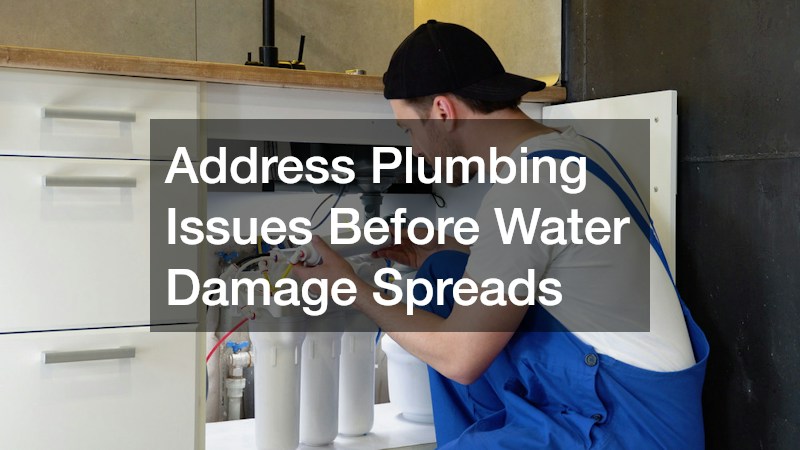
Plumbing problems often surface at the worst possible time, right as a storm is intensifying and water is already finding its way into places it shouldn’t. A licensed plumber can identify weak points like aging supply lines, slow leaks behind walls, or backflow valves that aren’t functioning correctly before they become emergencies. Many of these issues give almost no warning signs until pressure from heavy rainfall pushes them past their breaking point. A pre-storm inspection should also include checking your sump pump, since this is often the single most important device standing between a dry basement and thousands of dollars in water damage. Test the float switch, make sure the discharge line is clear of debris, and consider a battery backup in case the power goes out during the storm, which is exactly when pumps tend to fail.
Sewer and septic backups deserve attention too. A plumber can inspect the main line for tree root intrusion or sediment buildup that might cause wastewater to back up into your home once storm runoff overwhelms the system. Installing a backwater valve is a relatively low-cost upgrade that can prevent sewage from reversing course during periods of heavy flooding. Catching these issues ahead of time, whether it’s a hairline crack in a pipe joint or a valve that sticks halfway open, prevents a manageable repair from turning into a flooded basement once heavy rain arrives.
Backflow prevention is especially important for homes in areas where municipal sewer systems can back up during intense storms. When storm drains and sewer lines become overwhelmed, wastewater can reverse direction and push back into your home through floor drains, basement toilets, or laundry connections—often with little warning. Installing or testing a backwater valve gives you a mechanical safeguard that works even if you’re not home when the storm hits. These valves use a simple flap mechanism that allows water to flow out of your home but snaps shut if water tries to flow back in, and most cost between $500 and $1,500 to install depending on your plumbing layout.
If you already have a backwater valve, don’t assume it’s working just because it’s installed. Have a licensed plumber test it annually, since sediment, debris, or a stuck flap can render it useless exactly when you need it most. Homes with finished basements or below-grade plumbing fixtures should treat this as a non-negotiable line item on their storm prep checklist, since cleanup from sewage backflow is both costly and hazardous to your health.
- Test backwater valves annually by pouring water into the fixture and confirming the flap seals shut, preventing sewage backup during heavy storm runoff
- Insulate exposed pipes in crawl spaces, garages, and attics with foam sleeves to protect against storm-driven temperature swings and sudden freezes
- Fix slow leaks now, since a small drip under normal pressure can become a burst pipe once storm surges strain your water system
- Know the exact location of your main water shutoff valve and make sure every household member can operate it quickly in an emergency
- Consider a sump pump battery backup, as power outages often coincide with the heaviest rainfall and leave basements vulnerable to flooding
- Clear debris from floor drains and check that your sump pit is free of silt so water can drain efficiently when storms hit
Coordinate HVAC and Insulation Upgrades for Storm Resilience
Beyond basic cooling repairs, a full system evaluation from experienced HVAC companies can reveal whether your ductwork, insulation, and ventilation are set up to handle the pressure changes and moisture that come with severe storms. Poorly sealed ductwork can pull in humid air after a storm, leading to mold growth in walls and attics that isn’t visible until it’s a significant problem. Addressing these gaps ahead of time keeps indoor air quality stable even when outdoor conditions are chaotic.
Attic insulation also plays a surprising role in storm resilience, since proper insulation reduces condensation buildup that can accompany sudden temperature and humidity shifts after a storm passes. A combined inspection of your HVAC system and insulation levels often catches issues that a cooling-only service call would miss.
- Seal visible gaps in ductwork, especially in attics and crawlspaces
- Check insulation levels against regional recommendations
- Install a dehumidifier in basements prone to post-storm humidity
- Verify exhaust fans vent outside rather than into attic spaces
- Schedule a full system inspection annually, not just before summer
Plan Ahead for Structural Repairs and Safe Demolition
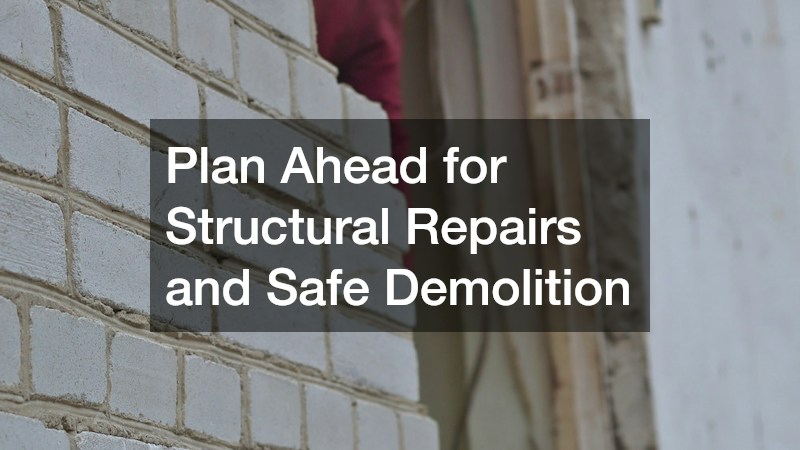
Sometimes storm damage is severe enough that repair isn’t realistic, and a damaged structure like a collapsed carport, storm-weakened shed, or compromised deck needs to come down safely before it becomes a hazard. Knowing when to call demolition contractors rather than attempting a DIY teardown can prevent injuries, especially when structures have hidden damage that isn’t obvious from the outside. Professionals can also identify whether a partially damaged structure is salvageable or poses enough risk that full removal is the safer choice.
If a major rebuild is in your future after a severe storm season, working with a custom home builder familiar with regional wind and flood codes ensures the new structure is built to withstand future events rather than simply replacing what was lost. This is also a good opportunity to incorporate storm-resistant materials and design choices that weren’t part of the original construction.
- Document all damage with photos before any repair or removal begins
- Confirm permits are in place before demolition starts
- Ask about debris disposal and site cleanup as part of the project scope
- Discuss storm-resistant materials if rebuilding is necessary
- Verify contractors carry proper insurance for demolition work
Conclusion
Storm readiness isn’t a single task you check off once a year; it’s an ongoing process of inspecting, maintaining, and upgrading the systems that keep your property safe. Start with the areas most likely to fail under pressure, like your roof, electrical panel, and drainage, then work through the rest of the list as time and budget allow. Addressing these systems now, before storm warnings are on the horizon, gives you the peace of mind that comes from knowing your property can handle whatever the season brings.
